Latest videos about DevOps
From Telecom to DevOps Cloud Engineer In 12 Months
- Alba, with over 10 years in telecom as an RF engineer, successfully transitioned to a DevOps Cloud Engineer role in just 10 months, despite having no prior IT background (Linux, coding, cloud). - Her journey involved self-study with AWS certifications, but she quickly realized the need for a structured learning path beyond certifications, leading her to enroll in a DevOps bootcamp. - A key to her success was a rigorous study routine: waking up at 5 AM daily before her 9-to-5 job and dedicating 3-4 hours on weekends, prioritizing personal growth over immediate comfort. - Alba proactively created her new DevOps role by identifying a company need and presenting her self-acquired skills and certifications to her manager, demonstrating initiative and long-term vision. - Her mindset emphasizes consistency over fleeting motivation, viewing learning as an enjoyable, continuous process, and prioritizing long-term career growth and skill acquisition over immediate financial gain.

If You're Ambitious But Inconsistent (In Tech), Watch This…
- **Inconsistent Learning is Ineffective for Technical Skills**: The video highlights that sporadic learning, even with significant total hours, leads to fragmented understanding and a lack of practical skills, especially for cumulative, hands-on fields like DevOps. This is because technical skills require continuous context and practice. - **The Problem of Context Loss**: Gaps in learning cause a loss of working memory and architectural understanding, forcing learners to re-learn concepts and wasting valuable time. This is particularly detrimental for DevOps, where each concept builds on previous ones. - **A System for Consistent Technical Skill Development**: The proposed solution involves a structured learning system focused on consistency, not motivation. Key components include: fixed daily 30-minute learning slots, pre-planned weekly technical outcomes (specific, testable builds), and daily documentation of work and troubleshooting. - **Importance of Hands-on Practice and Documentation**: The system emphasizes daily hands-on work to build muscle memory, encounter and solve real problems (leading to deeper learning), and understand through repetition. Documenting progress in a GitHub repository serves as reference material, proof of work, and a clear learning path. - **Compounding Effect of Consistent Practice**: By following this system, learners experience a compounding effect, where each day's learning builds on the last, leading to a comprehensive and practical understanding of the technology within a few weeks, enabling them to deploy and troubleshoot real-world applications effectively.

Junior vs Senior Developer: What’s the Real Difference? 💡 (It’s NOT lines of code)
- **Junior vs. Senior Engineers**: The core difference isn't just coding skill, but a deep understanding of the entire system and its architecture. - **System-Level Thinking**: Senior engineers focus on the complete flow, asking critical questions about data storage, authentication methods, security, and inter-component communication before writing code. - **Debugging and Optimization**: While juniors optimize their own code, seniors trace the entire request lifecycle to identify bottlenecks across the front-end, back-end, and database. - **Interview Focus**: Senior-level interviews prioritize system design questions over feature coding, evaluating architectural understanding. - **Path to Seniority**: Becoming a senior engineer involves grasping the full software development life cycle, including deployment, component interaction, and the rationale behind technical decisions.
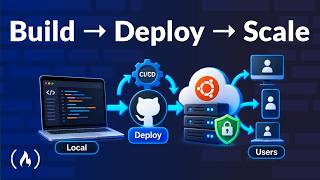
How to Deploy, Secure, and Automate Full-Stack Web Apps – Course for Beginners
- **Comprehensive Full-Stack Deployment Course**: This course offers a detailed, hands-on approach to deploying web applications from local development to a live, secure production environment. It emphasizes manual configuration first to build foundational understanding before introducing automation. - **Key Deployment Stages Covered**: The curriculum is structured into modules covering server setup (Ubuntu, SSH, firewall), application runtimes (Python, NodeJS, Gunicorn, Supervisor), data and search services (Meilisearch, backups), global delivery and security (DNS, HTTPS, CDN, security headers), and automation (CI/CD pipelines with GitHub Actions, pre-commit hooks). - **Emphasis on Security and Reliability**: A significant portion of the course is dedicated to securing the server (SSH key authentication, non-root users, UFW, Fail2Ban), implementing robust application management (Supervisor, Gunicorn), and ensuring data integrity (Meilisearch backups, atomic rollbacks). - **Practical, Hands-on Learning**: The instructor uses a real-world full-stack application (FastAPI backend, Vue.js frontend, Meilisearch) as a reference, guiding learners through each step with practical commands and debugging scenarios. Resources like GitHub repositories for code and documentation are provided. - **Advanced Topics and Best Practices**: Beyond the basics, the course delves into advanced concepts such as SSH tunneling, disk usage analysis (NCDU, Btop), log management (GoAccess, log rotation), vulnerability scanning (SCA, SAST, DAST with OWASP ZAP), and load testing (Locust) to build a resilient and high-performing system.

From CDs in India to Building AI Security at PayPal
- Joseph's career journey highlights resilience, continuous learning, and adaptability, especially after a layoff forced him to return to India and pivot his tech stack. - He emphasizes the importance of understanding underlying concepts and problem-solving over merely learning tools in isolation, a common mistake in DevOps learning. - Joseph advocates for proactive learning, setting an annual budget for self-improvement, and leveraging employer-sponsored training by first demonstrating value with smaller courses. - He stresses the significance of community engagement, networking, and sharing knowledge, which not only aids personal growth but also leads to industry recognition like Docker Captain and AWS Community Builder titles. - For junior engineers, Joseph advises focusing on behavioral skills, building a portfolio with practical projects (even using AI), and actively seeking to understand company problems to deliver tangible solutions.

3 changes in the engineering job market, most saw 1
The engineering job market has undergone three significant changes: * **Layoffs:** Widespread layoffs are a prominent and widely recognized issue in the tech industry. * **Increased Difficulty for Entry-Level:** It's now much harder for junior engineers to enter the field. Companies are less willing to invest in training due to automation capabilities that can handle tasks previously assigned to juniors. * **AI's Role in Engineering:** AI is fundamentally changing how senior engineers work, being integrated into pipelines, infrastructure, and clusters. This shift is based on practical, technical use cases, not just marketing hype. * These changes, while challenging, can be navigated to an individual's advantage by understanding the underlying reasons and data. * A free, live event on September 13th will delve into these three changes in detail, offering insights and answering questions.

What is MCP? MCP Explained Simply
- **The Problem with Direct LLM-API Integration**: Integrating AI models (LLMs) with various tools (databases, APIs) directly leads to a complex, messy codebase with numerous custom integrations. Each LLM-tool pair requires specific authentication, error handling, and rate limiting, making it difficult to swap models or add new tools. - **Introducing Model Context Protocol (MCP)**: MCP acts as a standardized communication language and a 'smart adapter' between LLM-powered applications and the tools they need to use. It translates complex, human-friendly API responses into concise, AI-friendly formats, preventing LLM hallucinations and confusion. - **Key Advantages of MCP**: MCP offers dynamic tool discovery, allowing LLMs to automatically identify available tools and their capabilities at runtime. It supports stateful context, enabling natural, multi-step conversations and chaining of tool calls without repeating information. Crucially, MCP enhances security by keeping API keys and sensitive credentials within the MCP server, never exposing them directly to the LLM. - **MCP Architecture and Implementation**: An MCP setup involves a 'host' application (e.g., chatbot backend) with an MCP client, and one or more MCP servers. Each MCP server acts as a wrapper for specific tools (e.g., PostgreSQL, Stripe), translating requests and responses. MCP servers can be community-driven, enterprise-built, or custom-made aggregators for internal tools, offering flexibility and the ability to embed custom business logic. - **MCP vs. Traditional APIs**: While APIs are designed for human developers, MCP is tailored for AI agents. It doesn't replace APIs but rather sits between LLMs and APIs, simplifying the integration layer and addressing the unique challenges of AI-tool interaction, such as context management and dynamic capability discovery.

⚠️ ANNOUNCING: AI-Era DevOps Live Masterclass
- A masterclass on "AI era DevOps" has garnered 1,000 sign-ups, addressing the community's concern about the relevance of learning DevOps/IT with AI. - The content is based on extensive research, including interviews with over 50 senior engineers across various fields (DevOps, DevSecOps, MLOps, Cloud Engineering, SRE) to identify real-world AI use cases in production. - The 3-hour live masterclass will cover three main areas: the impact of AI on the engineering job market (with real data, not hype), specific technical use cases of AI in engineering work, and effective learning methods for acquiring in-demand skills. - The masterclass is free, takes place on September 13th, and requires registration. Attendees can register by commenting "seat" on Instagram or visiting the provided link.

Why Patryk Left Traditional IT for DevOps! 🚀
- The speaker started their IT journey as a trainee network engineer in London while pursuing a master's degree, supporting Wi-Fi networks, CUCM, and servers for theaters. - After 6 months, they left the small company due to a lack of learning opportunities. - They then joined a large ISP, Cancom, as a service desk engineer, despite the title, hoping for network-related learning. - The experience at Cancom was disappointing; after only one month, they resigned due to the highly manual processes, company-specific knowledge, and lack of automation, exemplified by a 30-40 page manual for adding new users. - The speaker emphasized their desire for challenging and interesting work, which was absent in the manual, unautomated environment at Cancom.

Why You’re STUCK as a Junior Developer 😳 (Fix This Fast!)
- Many junior developers get stuck at the same title and salary for years because they lack a holistic understanding of how systems work beyond their immediate code. - Juniors often know how to write specific code (e.g., a database query, a React form, an API endpoint) but don't understand the underlying mechanisms, protocols, or the full lifecycle of their code. - Senior engineers distinguish themselves by understanding the complete flow of a system, enabling them to diagnose problems across different components (e.g., network, database, front-end, back-end). - The key to advancing from junior to senior is not just years of experience, but grasping the 'big picture' – how different components communicate and integrate. - The 'IT Fundamentals' course aims to provide this comprehensive understanding of the software development lifecycle, focusing on how all pieces connect rather than deep dives into individual components.

Cloud Explained in 5 Minutes
- The cloud is defined as renting computing resources (servers, storage, databases, networking) from large companies (like Amazon, Microsoft, Google) that own massive data centers. - It offers immense flexibility, allowing users to scale resources up or down instantly based on demand, paying only for what they use. - Key benefits include offloading the burden of physical hardware maintenance and infrastructure management, enabling users to focus on application development. - Despite its advantages, using the cloud effectively requires skill to manage costs, ensure reliability, and maintain security, leading to the demand for cloud engineers. - The underlying hardware, such as AMD EPYC processors, plays a crucial role in the efficiency, density, and cost-effectiveness of these data centers.

How to Get Hired in DevOps WITHOUT a Tech Degree 💼🔥
- **DevOps Bootcamps as Social Proof:** Completing a DevOps bootcamp, especially from a recognized provider, serves as strong social proof and can make applicants recognizable to interviewers. - **Importance of Projects and GitHub:** Including a link to a GitHub profile with well-explained projects in a CV is crucial for showcasing practical skills and demonstrating confidence in one's abilities. - **Value of Professional Certifications:** Professional certifications are highlighted as tough to acquire but highly beneficial for demonstrating expertise. - **Bridging the Computer Science Gap:** Bootcamps are particularly useful for individuals without a traditional computer science background, as DevOps is not typically taught in standard CS curricula. - **Non-Traditional Learning for DevOps:** Since traditional degrees in DevOps are rare, bootcamps, on-the-job experience, or self-study are essential pathways, with bootcamps offering a structured way to prove skill level.
From Apprentice to DevOps Engineer: Here's the Exact Path He Took
- Amin's academic performance initially collapsed during his IT studies, dropping from top scores to failing grades in math and physics. However, he didn't give up and instead focused on improving his learning approach. - He developed a highly disciplined and organized learning strategy, emphasizing deep understanding of concepts by stopping to research any unfamiliar terms. This method proved crucial for his success in both academics and professional development. - Despite lacking technical skills for his first apprenticeship, Amin secured the role by demonstrating a positive mindset, strong willingness to learn, and confidence in his ability to acquire new skills. His attitude was more impactful than his initial technical proficiency. - Amin proactively invested in structured learning paths, such as the IT Fundamentals and DevOps bootcamps, to accelerate his career transition. This strategic investment of time and money allowed him to quickly gain in-demand skills and double his salary in a single month. - His journey highlights the importance of intrinsic motivation, setting clear goals, and continuous learning. He views an engineer who stops learning as a "dead flower," emphasizing the need for constant upskilling and curiosity to thrive in the tech industry.

How ONE Simple DevOps Change Saved Thousands! 💰
- The speaker successfully applied concepts from a boot camp to introduce a significant process improvement to their team, specifically regarding certificate management. - The existing certificate renewal process was highly manual, time-consuming, involved multiple teams and external parties, and was prone to errors and delays. - The speaker proposed migrating all customer certificates to AWS Certificate Manager (ACM), which would automate renewals and eliminate the associated manual effort and costs. - This change resulted in substantial benefits, including saving approximately $200 per customer per year and removing the burden of manual renewals. - While the technical implementation (Terraform code) was relatively quick, the main challenge was stakeholder management, convincing people, and addressing fears about changing a long-standing procedure, which took one to two months.

Why DevOps Engineers are ACTUALLY getting hired in 2026 🚨
- The DevOps job market faces a shortage, not due to a lack of tool-specific knowledge (Jenkins, Docker, Kubernetes), but a scarcity of engineers who can think in systems and understand the entire software lifecycle. - Companies need engineers who can bridge the gap between different specialized domains like software development, system administration, and security, acting as 'translators' between teams. - Most engineers specialize vertically, leading to a lack of professionals who can connect these disparate domains, which is the core skill of a DevOps engineer. - A 6-month DevOps bootcamp is highlighted as a way to acquire these in-demand skills, enabling graduates to understand enough of each domain to facilitate communication and collaboration. - The demand for these cross-functional DevOps skills is growing as more companies become software-centric, emphasizing the widening gap in the market and the value of such expertise.

From Medical Devices to AI DevOps Engineer! 🤯💻
- Anna, originally from Barcelona, studied industrial engineering and began her career in medical devices in Switzerland, working for major companies like Johnson & Johnson and Abbott. - After several years, she found the tasks repetitive and sought a more challenging career, especially during the COVID-19 pandemic. - Inspired by online videos, she decided to transition into tech, self-studying Python, data science, and data engineering, eventually specializing in DevOps. - She pursued professional certifications and completed a DevOps bootcamp, leading to her first cloud DevOps role at Swisscom in 2024. - Currently, Anna works at an AI company specializing in speech analytics and recognition, developing and implementing products for clients in finance, telecommunications, and insurance.

CI/CD Explained in 5 Minutes
[00:00] Give me 5 minutes and I'll show you how [00:02] code gets from a laptop to production [00:06] environment for millions of users. A [00:08] developer writes some code on their [00:11] laptop. A few hours later, that exact [00:13] code is running for mil

AI may replace DevOps, but not for the reason you think
- **AI will not replace DevOps jobs; it will make them more valuable.** The consensus from industry experts and successful engineers is that AI is a tool that enhances productivity and scales infrastructure, rather than eliminating the need for human engineers. AI models currently have about 70% accuracy in infrastructure tasks, which is insufficient for production environments, requiring human oversight and expertise. - **DevOps engineers are becoming more powerful and in demand.** Historically, new automation technologies have enabled individual engineers to manage increasingly larger and more complex infrastructure (e.g., from 10 servers to 10,000 containers). AI is expected to continue this trend, allowing engineers to manage even more, leading to an expansion of infrastructure and projects, not a reduction in jobs. - **New specializations are emerging, all built on a DevOps foundation.** The rise of AI is creating new roles like DevOps for AI (building infrastructure for AI companies) and AI for DevOps (using AI to perform DevOps tasks more efficiently). These roles, along with MLOps and Platform Engineering, require a strong understanding of DevOps fundamentals, including Kubernetes, Docker, Terraform, CI/CD, and cloud platforms. - **Hands-on project experience and certifications are crucial for career entry and growth.** Successful engineers highlighted the importance of building complex, end-to-end projects that demonstrate practical understanding, not just theoretical knowledge. Combining a strong project portfolio (e.g., on GitHub/GitLab) with relevant certifications (e.g., CK, AWS) significantly increases visibility to recruiters and validates skills, especially for those transitioning into the field. - **Continuous learning is key to long-term career security and advancement.** The rapidly evolving tech landscape, especially with AI, necessitates ongoing skill development. Engineers who continuously learn new tools, adapt to emerging technologies, and specialize in areas like DevSecOps are highly valued, leading to faster career progression, increased salaries, and more opportunities.

Want to 100x your value as a software engineer? 💸👇
- Software developers have a significant advantage in transitioning to DevOps due to their existing programming and problem-solving skills. - The fastest path involves learning Linux/cloud fundamentals, Infrastructure as Code (Terraform), CI/CD pipelines, and containerization (Docker/Kubernetes). - Developers' understanding of application architecture, APIs, and scalability is a strong asset that many traditional sysadmins lack. - The main challenge for developers in this transition will be mastering monitoring, logging, and incident response. - Acquiring these DevOps skills can significantly increase a software engineer's value, potentially making them 100 times more valuable than with traditional software engineering skills alone.

The CI/CD Strategy War — Which One Actually Wins?
- **Three CI/CD Pipeline Strategies**: The video outlines three main CI/CD pipeline strategies: Minimalist (Dev to Prod), Paranoid (5+ environments), and Practical (Dev, Staging, Prod). - **Minimalist Approach**: This strategy deploys directly from development to production, relying heavily on excellent automated tests. It's fast and suitable for startups or internal tools where the cost of a bug is low, but requires high discipline and robust test coverage. - **Paranoid Approach**: Characterized by multiple environments (Dev, Test, Staging, Pre-Prod, Prod), this strategy prioritizes safety and is ideal for high-risk systems like banking or healthcare, where bugs can have catastrophic consequences. However, it's slow and expensive. - **Practical Approach**: This balanced strategy uses three environments (Dev, Staging, Prod) and incorporates techniques like canary deployments, feature flags, and robust monitoring/rollback. It's suitable for most customer-facing applications where bugs are inconvenient but not catastrophic, offering a good balance of speed and safety. - **Common Mistakes**: The video highlights common pitfalls such as too many unused environments, staging environments not matching production, adopting a minimalist approach without sufficient automated tests, and adding environments instead of fixing unreliable tests.
From QA to DevOps - Your Hidden Advantage
- **QA engineers possess inherent strengths for DevOps:** Their understanding of quality gates, testing strategies, and failure scenarios directly aligns with the needs of DevOps, particularly CI/CD automation. - **Scripting skills are transferable:** QA's experience in writing logic for test automation can be directly applied to infrastructure as code, which is essentially scripting to automate infrastructure creation. - **The primary learning curve is infrastructure and cloud platforms:** This is identified as the weakest spot for QA engineers transitioning to DevOps, requiring dedicated learning, especially focusing on one cloud platform like AWS. - **Focused learning on cloud concepts and basic services is key:** The recommendation is to learn cloud and infrastructure concepts first, then 4-5 basic AWS services relevant to application deployment. - **A 4-6 month dedicated commitment can lead to deep DevOps expertise:** This timeframe is suggested for QA engineers to gain a profound understanding and ability to build end-to-end DevOps processes, not just superficial knowledge.
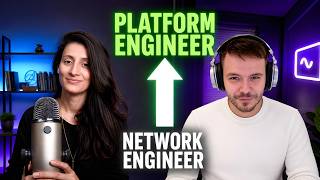
From Laid-Off Network Engineer to Platform Engineer: Patryk’s DevOps Journey
[00:00] I spent 3 months in the apartment in the [00:02] city of New York without anyone. I was [00:05] even surprised that in IT people still [00:08] do this word document 20, 30, 40 pages [00:12] and you had to go step by step. They [00:14] didn't want to au

If I would start DevOps from 0 - How would I start and what would I learn
[00:00] Stop following random road maps that [00:03] make you even more confused than before [00:06] you started using them. To make this [00:08] easy for you, let me tell you the exact [00:10] sequence that actually works because it [00:13] has worked for tho

Can You Afford NOT to Learn DevOps? Salary Data That Will Change Your Career Plans
[00:00] Let me show you actual DevOps engineer [00:03] salary data that many recruiters are not [00:07] sharing publicly. You have junior DevOps [00:09] engineers ranging from 75 to 95K. [00:13] Mid-level [00:14] 10K to 140K. So that's already six [00:17] figu