Latest videos about Scalability
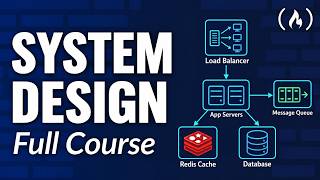
Design Software Systems Like a Senior Engineer – Complete Course
- **Comprehensive System Design Framework**: The course introduces a practical five-step framework for tackling system design interviews, emphasizing structured thinking, clarifying vague requirements, and managing time effectively under pressure. - **Key Evaluation Dimensions**: Beyond just the technical design, candidates are evaluated on communication and collaboration, structured thinking, technical judgment (justifying technology choices), practical depth (handling failure modes and scalability), and time management. - **Real-World System Examples**: The course walks through designing complex systems similar to Spotify (music streaming), Booking.com (hotel reservation), and WhatsApp (messaging app) from scratch, applying the five-step framework to each. - **Scalability and Reliability Focus**: For each example, the analysis delves into scaling strategies (e.g., CDNs, load balancers, database sharding, replication), handling concurrency, ensuring data consistency, and designing for failure scenarios and disaster recovery. - **Distinguishing Senior from Mid-Level Engineers**: A key insight highlights that senior engineers prioritize planning, understanding requirements, estimating capacity, and choosing architecture (the blueprinting phase) before diving into tech selection and coding, which is often reversed by mid-level developers.
Cloud Explained in 5 Minutes
- The cloud is defined as renting computing resources (servers, storage, databases, networking) from large companies (like Amazon, Microsoft, Google) that own massive data centers. - It offers immense flexibility, allowing users to scale resources up or down instantly based on demand, paying only for what they use. - Key benefits include offloading the burden of physical hardware maintenance and infrastructure management, enabling users to focus on application development. - Despite its advantages, using the cloud effectively requires skill to manage costs, ensure reliability, and maintain security, leading to the demand for cloud engineers. - The underlying hardware, such as AMD EPYC processors, plays a crucial role in the efficiency, density, and cost-effectiveness of these data centers.