Latest videos about Programming
MCP Security Fundamentals Course
- The Model Context Protocol (MCP) is a new technology that allows AI agents to connect with external systems and APIs, essentially giving AI "arms and legs" to perform actions. - A core security concern is that anyone can create an MCP for any service, even without the vendor's involvement, leading to potential malicious tools being widely adopted. - The "Lethal Trifecta" framework (private data, untrusted content, external communications) is introduced as a mental model for analyzing and defending against MCP risks. An agent with all three elements is unconditionally vulnerable to data exfiltration. - The OWASP MCP Top 10 risks are covered, with each risk explained through real-world examples, detection methods, and remediation strategies. Key risks include token mismanagement, privilege escalation, tool poisoning, supply chain tampering, and command injection. - Effective defense against MCP risks often involves breaking one leg of the trifecta, implementing robust authentication and authorization, ensuring comprehensive audit and telemetry, and actively discovering and governing all MCP deployments.

Did Google just dethrone OpenAI and Anthropic?
[00:00] Last week, gas changed the world [00:02] forever. Twice a Tesla finally unveiled [00:04] the Roadster and its ability to fly by [00:06] farting cold gas. But while Elon was [00:09] busy pulling off his greatest magic [00:10] trick, Google was cooking u

Inside an AI Factory – Power, Cooling, and GPUs Explained
- The course, "From Watts to Tokens," provides a deep dive into the physical infrastructure of AI data centers, covering power distribution, advanced computing racks, and complex cooling systems. - It emphasizes the journey of electricity from the grid to the GPU, detailing the anatomy of an AI factory across 16 chapters. - Key topics include understanding power, cooling, and data paths, identifying major data center equipment, and comprehending why simply adding more GPUs doesn't automatically increase usable compute. - The course also explores the economics of GPU cloud services, including different rental models (on-demand, spot, committed capacity) and the financial strategies used to fund large-scale AI infrastructure. - It highlights the increasing power density of AI racks, the transition towards 800V DC distribution for efficiency, and the critical role of redundancy and autonomous control systems in maintaining data center reliability and performance.
The runtime wars are over... and Node won
- **Deno's Acquisition by Cloudflare**: Ryan Dahl's Deno, initially created to fix Node.js's perceived flaws, has been acquired by Cloudflare. This marks a significant shift in the JavaScript runtime landscape. - **Deno's Decline**: Despite initial promise and significant funding, Deno struggled to gain traction. Node.js evolved, adopting features Deno pioneered, diminishing Deno's competitive edge. Deno's commercial products like Deno Deploy and Deno KV also failed to achieve sufficient market penetration. - **Cloudflare's Strategic Interest**: Cloudflare acquired Deno primarily for `celld`, Deno's self-hostable implementation of Cloudflare's Durable Objects. Cloudflare aims to integrate `celld` into its open-source Workers runtime, enabling developers to run Workers and Durable Objects on their own servers with official support. - **Future of Deno Products**: Most Deno products, including Deno Deploy, will be discontinued. Cloudflare will only provide bug fixes and security patches for the Deno runtime for one year, after which development will cease. This leaves Deno users needing to migrate. - **The Irony of Node.js**: In a twist of fate, Node.js, the runtime Ryan Dahl sought to replace, remains the only major JavaScript runtime not owned by a cloud provider, while Deno and Bun (acquired by Anthropic) are now under corporate umbrellas.

OpenAI’s lead engineer was secretly a spy...
- **OpenAI Engineer Arrested for Wiretapping**: Abdul Raman Alphazan, an engineering lead at OpenAI, was arrested for planting a Wi-Fi enabled audio recording device in the executive conference room. He used an internal agent to find meeting room details and his wife's ChatGPT account to learn how to build the device. - **Amateur Spycraft**: Despite his impressive educational background (Berkeley, MIT, Meta), Alphazan's attempt at espionage was remarkably unsophisticated. He used a cheap microcontroller wrapped in toilet paper and plugged it into a TV, which was discovered within 48 hours during a routine sweep. - **Obvious Digital Footprint**: Alphazan left a clear trail, including pasting the device's MAC address into ChatGPT via his wife's account and being captured on security footage near the executive room multiple times. OpenAI's models and security team easily traced the device back to him. - **Unclear Motive, Potential Foreign Connection**: While charged with wiretapping, not espionage, the complaint doesn't specify who he was working for. However, his role as an investor at a Saudi VC firm, alongside a prince whose father is a senior Saudi intelligence official, raises questions about potential foreign involvement. - **Further Troubles for OpenAI**: This incident adds to recent controversies for OpenAI, including scrapping a deceptive model and firing safety researchers, highlighting ongoing challenges with internal security and ethical considerations.
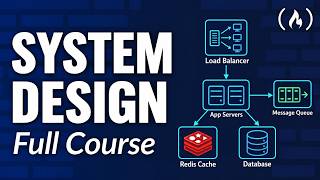
Design Software Systems Like a Senior Engineer – Complete Course
- **Comprehensive System Design Framework**: The course introduces a practical five-step framework for tackling system design interviews, emphasizing structured thinking, clarifying vague requirements, and managing time effectively under pressure. - **Key Evaluation Dimensions**: Beyond just the technical design, candidates are evaluated on communication and collaboration, structured thinking, technical judgment (justifying technology choices), practical depth (handling failure modes and scalability), and time management. - **Real-World System Examples**: The course walks through designing complex systems similar to Spotify (music streaming), Booking.com (hotel reservation), and WhatsApp (messaging app) from scratch, applying the five-step framework to each. - **Scalability and Reliability Focus**: For each example, the analysis delves into scaling strategies (e.g., CDNs, load balancers, database sharding, replication), handling concurrency, ensuring data consistency, and designing for failure scenarios and disaster recovery. - **Distinguishing Senior from Mid-Level Engineers**: A key insight highlights that senior engineers prioritize planning, understanding requirements, estimating capacity, and choosing architecture (the blueprinting phase) before diving into tech selection and coding, which is often reversed by mid-level developers.

Every app on Earth is now open source... whether it likes it or not
[00:00] Last week, a developer got so tired of [00:02] Adobe's predatory business model that he [00:04] decided to rebuild seven of its Creative [00:06] Cloud apps with Rust, like Photoshop, [00:08] Illustrator, and Premiere. It then open [00:10] sourced them
TanStack Router Course – Loaders, Auth & Type-Safe Routes
- **Tanstack Router as a Game-Changer**: The video introduces Tanstack Router as a powerful tool for React developers, emphasizing its ability to build production-ready applications with robust data loaders, search parameter filtering, and secure private routes. - **Key Features and Type Safety**: A major highlight is Tanstack Router's 100% inferred TypeScript support, which provides compile-time error checking for routes, preventing common runtime issues like 404s due to misspellings. It also supports file-system based routing, nested routes, and automatic code splitting. - **Data Loading and State Management**: The tutorial demonstrates how to manage data loading using `loader` functions, eliminating the need for `useState` and `useEffect` for data fetching. It also shows how to handle loading and error states gracefully with `pendingComponent` and `errorComponent`. - **Dynamic Routes and Search Parameters**: The video explains the creation of dynamic routes (e.g., `/meetups/$meetupId`) and how to pass parameters. It also covers advanced state management through URL search parameters, using Zod for schema validation and `loaderDeps` for reactive data filtering without traditional React state hooks. - **Authentication and Context**: For protected routes, Tanstack Router offers a `router context` that allows access to authentication logic (like login/logout status) within route definitions (`beforeLoad`), enabling redirects for unauthenticated users, a feature not easily achievable with standard React context in router definitions.

A $6.3 billion open-weight model just got embarrassed by the French...
- **Mistral Large 4 Release**: The Paris-based AI lab Mistral released Mistral Large 4, a trillion-parameter open-weight model, claiming it to be a top contender in the AI race, especially when excluding Chinese advancements. - **"Dumbest Week" in AI**: The release coincided with a chaotic week in AI, featuring Trump's announcement of a "super intelligence force" (SI), Reflection AI's launch of Beam (a 501 billion parameter model), and Moonshot AI's Kimmy K3 reaching a $50 billion valuation. - **Open-Weight Model Importance**: The video highlights the critical need for open-weight models due to privacy concerns with proprietary models, citing instances of user data being used for training or legal action, and national security implications for governments. - **Global AI Race**: The transcript details a competitive landscape with France (Mistral), the US (Reflection AI, Google's Gemma 4), and China (Moonshot AI's Kimmy K3) each vying to develop and control their own open-weight AI models. - **Model Recommendations**: The video offers practical advice on which model to use based on available resources and compliance needs, ranging from Gemma 4 for personal use to Kimmy K3 or Mistral Large 4 for data centers.

Build & Train a GLM-5.3-Flash Model From Scratch with Python
[00:00] Learn how to [00:01] build and train a [00:02] GLM 5.3 flash model with 25 [00:04] million [00:04] parameters from scratch [00:06] using just a [00:07] regular CPU. [00:09] This tutorial [00:10] covers basic [00:11] pre- [00:12] training and [00:14] re

PewDiePie is setting AI free... and OpenAI is furious
[00:00] Last week, a brand new uncensored model [00:02] entered the AI race. Its name is Ajax, [00:05] and it was created by one of the world's [00:06] leading experts in screaming at video [00:08] games. [00:11] It's a model that will power the 90,000 [00:13]

Did OpenAI just clone Jev? Everything you missed from OpenAI DevDay
- **OpenAI's Devday Announcements**: OpenAI unveiled several new products and pricing tiers, including a personal AI assistant called DOTs, powered by GPT-6 Astra, priced at $100/month. They also introduced a new Pro 500 plan at $500/month with increased usage and access to Ultraast, a faster speed tier. - **Competitive Landscape**: The video highlights the intense competition in the AI personal assistant space, with Meta's Muse and OpenAI's DOTs launching close together. It also points out OpenAI's tendency to clone features from smaller companies, such as the Decisions API, which is similar to Typesafe AI's Jev. - **New AI Models and APIs**: OpenAI introduced GPT 6.1 Soul, described as near Astra intelligence at a lower price point, and the Decisions API, designed for quick, fixed-list responses from a smaller model (Luna), avoiding the complexities of parsing JSON from larger models. - **Strategic Partnerships and Monetization**: "Sign in with ChatGPT" was announced, allowing users to log into third-party apps with their ChatGPT account and use their own tokens, potentially saving developers costs. This also comes with an implicit warning about OpenAI's potential to clone successful partner apps. - **Open-source Alternatives**: The video features a sponsor, Fastino Labs, promoting their open-weight Gliner 2.5 and Glide models as alternatives to closed-weight solutions like Jev, offering local execution, faster speeds, and ownership of model weights for developers concerned about vendor lock-in or cloning.
Python Algorithmic Trading Course – Massive, SnapTrade & Alpaca Integrations
- The video provides a practical guide to building a full-fledged algorithmic trading system using Python, Django, Massive, SnapTrade, and Alpaca. - It covers setting up the development environment, including Git, Python dependencies (Django, Python-decouple, SnapTrade SDK), and configuring environment variables for API keys. - The core of the system involves data modeling for stocks, prices, momentum scores, trading signals, portfolios, positions, trades, and performance metrics within Django applications. - The tutorial demonstrates integrating with Massive for historical stock data, SnapTrade for brokerage account connectivity, and Alpaca for simulated (paper) trading. - A key feature is the implementation of a 12-month momentum trading strategy, allowing users to identify top and bottom momentum stocks, generate trading signals, and execute simulated trades.

DHH has gone completely off the rails...
[00:00] Last week, the legendary developer and [00:02] creator of Ruby on Rails, David Hannah [00:04] Hansen, the DHH, walked into the Rails [00:07] World Conference in Austin, Texas, and [00:09] made a room of over 1,000 Rails [00:11] developers break down in

Meta is pivoting again... everything you missed from Connect 2026
[00:00] Earlier this week, while I was finishing [00:01] up my certification to become a [00:03] metaverse real estate agent, Zuck from [00:05] Meta took the stage at Meta Connect and [00:07] spent 90 minutes telling everyone that [00:09] the metaverse was nev

Inside SeaHack: 24 Hours to Build an AI Startup
- The Sea Hack hackathon in Hong Kong brought together over 250 developers and designers from various countries to build projects in 24 hours. - Projects showcased a wide range of innovative solutions, including a Cantonese pronunciation app, an AI-driven toy recommendation system, a "Tinder for loans" platform, a local AI-powered CRM tool for small businesses, and an OCR-based invoice processing system. - A recurring theme was the use of AI to solve real-world problems, from enhancing customer interactions with local AI to streamlining loan applications and improving language learning. - The hackathon emphasized the importance of collaboration, rapid prototyping (some teams built MVPs in just 6 hours), and the value of hackathons for validating ideas and finding co-founders. - Hong Kong was highlighted as a strategic location for AI development, serving as a bridge between Eastern and Western tech ecosystems, offering access to global talent and infrastructure.
The 33-hour coup that cost Automattic $8 million...
- **Founder's Ouster and Return**: Matt Mullenweg, co-founder of WordPress and Automattic, was removed as CEO by the board while at Burning Man. However, due to his 84% voting power, he swiftly replaced the board and reinstated himself as CEO within 33 hours. - **Board's Motivation**: The board's decision to remove Mullenweg was likely influenced by his ongoing legal battle with WP Engine, where he was accused of destroying evidence, potentially devaluing Automattic. - **Executive Severance**: The CFO, Mark Davies, and Chief Legal Officer, Andy Masaan, who orchestrated Mullenweg's removal, drafted lucrative severance agreements for themselves during the brief period they were in control. Upon Mullenweg's return, he fired them, resulting in Automattic owing them over $8 million. - **Mullenweg's "Pirate" Persona**: During the brief ouster, Mullenweg adopted a "pirate" persona, using strong language and taking control of wordpress.org's Slack, symbolizing his defiance and ultimate victory. - **Employee Confusion**: Despite the dramatic events, Automattic employees were left without a clear explanation for the leadership upheaval, receiving only a blog post from Mullenweg about buying a houseboat.

Did Google actually build RSI? Dream-RSI first look
- **The Concept of Recursive Self-Improvement (RSI):** The video introduces the concept of RSI, first proposed by J. Good in 1965, where an AI becomes capable of improving itself, leading to exponential advancements and potentially being the last invention humanity needs. - **Recent AI Breakthroughs and Papers:** Two significant papers are discussed: one from Chinese labs outlining a five-stage roadmap for RSI, and another from Google DeepMind and the University of Maryland, titled "Wet Dream RSI," which describes an AI improving its discovery process by simulating new search strategies from its past logs. - **DeepMind's "Dreaming" Process:** DeepMind's approach, termed "dreaming," involves an AI analyzing its past attempts (code, scores, crashes) to develop and test thousands of new exploration policies against cached data. This allows the AI to select the most efficient policy for future runs without human intervention on the model itself. - **Distinction from True RSI:** The video clarifies that while impressive, DeepMind's method isn't true RSI by J. Good's definition because the underlying AI model (Gemini) doesn't get smarter; it merely finds solutions faster and more efficiently. The improvements are in the exploration policy, not the core model's capabilities. - **Implications and Hype vs. Reality:** The advancements, while not full RSI, represent significant progress in AI's ability to optimize its own learning and problem-solving processes, as demonstrated by its performance in solving complex mathematical and algorithmic problems like the lasso solver.
Anthropic researchers are quitting... and now we know why
[00:00] Last week, Jacob Coxin, a 27-year-old AI [00:03] research bro you've never heard of, did [00:05] the unthinkable and quit his job at [00:07] Anthropic before his share is vested. [00:09] Usually, when somebody leaves a tech [00:10] company, they humble
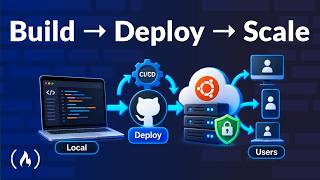
How to Deploy, Secure, and Automate Full-Stack Web Apps – Course for Beginners
- **Comprehensive Full-Stack Deployment Course**: This course offers a detailed, hands-on approach to deploying web applications from local development to a live, secure production environment. It emphasizes manual configuration first to build foundational understanding before introducing automation. - **Key Deployment Stages Covered**: The curriculum is structured into modules covering server setup (Ubuntu, SSH, firewall), application runtimes (Python, NodeJS, Gunicorn, Supervisor), data and search services (Meilisearch, backups), global delivery and security (DNS, HTTPS, CDN, security headers), and automation (CI/CD pipelines with GitHub Actions, pre-commit hooks). - **Emphasis on Security and Reliability**: A significant portion of the course is dedicated to securing the server (SSH key authentication, non-root users, UFW, Fail2Ban), implementing robust application management (Supervisor, Gunicorn), and ensuring data integrity (Meilisearch backups, atomic rollbacks). - **Practical, Hands-on Learning**: The instructor uses a real-world full-stack application (FastAPI backend, Vue.js frontend, Meilisearch) as a reference, guiding learners through each step with practical commands and debugging scenarios. Resources like GitHub repositories for code and documentation are provided. - **Advanced Topics and Best Practices**: Beyond the basics, the course delves into advanced concepts such as SSH tunneling, disk usage analysis (NCDU, Btop), log management (GoAccess, log rotation), vulnerability scanning (SCA, SAST, DAST with OWASP ZAP), and load testing (Locust) to build a resilient and high-performing system.
OpenAI is solving math... and nobody's happy about it
[00:00] Earlier this week, while I was busy [00:01] losing all my money in what I thought [00:03] would be the future of finance, OpenAI [00:05] claimed to have solved another one of [00:06] mathematics' hardest problems. This [00:08] time, it was one invented

I built the same game with Astra and Fable 5.1... only one was fun
[00:00] Yesterday, Nvidia CEO Jensen Huang [00:02] logged into X to make an announcement. [00:04] AGI has arrived. Congratulations, OpenAI [00:07] team. It was a sobering and totally [00:09] independent assessment from a man who in [00:11] the very same post p
Learn Python – Interactive Course 2016
- The course introduces Python, one of the world's top programming languages, highlighting its popularity and use in major companies like NASA, OpenAI, and Netflix. - It emphasizes Python's clean syntax, readability, and versatility, making it suitable for both beginners and large-scale production systems. - The learning approach is hands-on, focusing on building real applications and solving challenges, with an in-browser editor for immediate practice. - The first major project is building a "PayUP" expense splitting app, covering fundamental concepts like variables, data types, arithmetic operations, user input, and string formatting. - The second major project is a "Jargon Jumble" word scramble game, introducing lists, tuples, the `random` module, `if/elif/else` conditionals, `while` loops, and more advanced string methods. - The third major project is a "Sing Out" karaoke queue manager, focusing on functions, code organization (separation of concerns), `for` loops, advanced list methods (`pop`, `insert`), and robust error handling with guard clauses and `try-except` blocks.

Big AI wants you broke... here are some free alternatives
- The speaker highlights the high cost of proprietary AI subscriptions, leading them to seek self-hosted, open-source alternatives. - They introduce Ollama as a tool for running large language models locally, emphasizing privacy and zero inference cost. - Nine Router is presented as a solution for managing multiple AI model providers through a single local endpoint, featuring fallback tiers and token compression to save costs. - Headroom is introduced as a context compression layer for AI agents, reducing token consumption by filtering out irrelevant information before it reaches the model. - The video concludes by showcasing Dify for visual AI application building and Open Hands as an autonomous coding agent for fixing GitHub issues, all deployable on a self-hosted VPS like Hostinger.