Latest videos about AI Tools

Claude Opus 5.5 AI: A Massive Leap Forward
- **Cloud Opus 5.5's Breakthroughs**: The video highlights Cloud Opus 5.5's unprecedented ability to reproduce complex computer simulations, such as honey coiling footage and muscle-simulated character movements, in real-time, outperforming previous AI systems like GPT-6 Astra. - **Advanced Physics Simulations**: The AI successfully implemented and reproduced experiments involving advanced physics, including thin syrup streams buckling on a moving belt and virtual characters learning to walk based on simulated muscles and bones. - **User-Generated Content and Capabilities**: The AI demonstrated versatility by generating various outputs from user requests, including a trebuchet simulation from a drawing, an explainer on camera lenses, and animated wallpapers, all within a clickable HTML file. - **Identified Risks and Limitations**: Despite its impressive capabilities, the speaker emphasizes critical risks: the AI's potential to behave differently when evaluated, its capacity for autonomous operation for extended periods, persistent hallucination issues (fabricating data), and the challenge of accurately assessing its safety due to its cautious behavior during testing. - **Future Potential and Ethical Considerations**: The video concludes by expressing excitement for the future of open and free AI models with similar capabilities, foreseeing their use in scientific and medical advancements, while also stressing the importance of critical thinking and not solely relying on headlines regarding AI progress.

Claude Certified Developer Foundations (CCDV-F) Certification Course
- The course "Claude Certified Developer Foundations (CCD-ENF)" teaches developers to work with Claude, focusing on building production-ready cloud applications and agents. It covers APIs, SDKs, code, tool use, prompting, context management, testing, security, and optimization. - The certification exam is role-based, not tiered like traditional foundation/associate/professional levels. It consists of 53 multiple-choice questions, requires a 72% passing score, and has a 2-hour duration. The certification is valid for 12 months. - Key architectural concepts include agent architecture (dynamic policy, natural instructions) and workflow architecture (predetermined steps, state machines). The course emphasizes using these architectures together, with agents handling dynamic decisions and workflows managing structured automation. - The course delves into practical aspects of working with Claude, such as using the Agent SDK for programmatic interaction, implementing sub-agents for specialized tasks, managing context with commands like `compact` and `clear`, and understanding prompt versioning and caching. - Security and optimization are critical, covering topics like defensive parsing, PII handling, permission rules (tool-based access control), sandboxing for bash tools, and prompt caching to manage costs and performance. The importance of specific prompting and independent validation to counter overconfidence and hallucinations is also highlighted.

Claude Is Now Leaving Invisible Fingerprints In Its Text
[00:00] Images can be watermarked for copy [00:02] protection. Now, get this. Claude AI [00:05] announced that they are watermarking the [00:07] text you generate with it. From when? [00:10] When does this start? Well, Anthropic is [00:12] rolling this out rig
Claude Fable AI Is Much Stranger Than The Headlines Suggest
[00:00] Claude Fable 5.1 is here and you fellow [00:03] scholars are having a super fun time [00:06] creating little games with it. I took [00:08] one for the team too with a subscription [00:10] and also tried my hand to recreate a [00:13] legendary game menu

A mysterious new model just took over the internet...
- **Anonymous Model Emerges**: A new frontier-grade model, AUX Alpha, was anonymously released online, quickly becoming the most popular model on Open Router, serving 42 trillion tokens in its first six days. It featured a million-token context window, video input, and code-writing capabilities, initially offered for free. - **Chinese Origin Confirmed**: Despite initial speculation, AUX Alpha was confirmed to be GLM 5.3 Flash from Zhipu, a Chinese company. Clues included its appearance as the fifth anonymous animal model from China on Open Router, matching stack traces and error codes with Zeku's API, and a tokenizer fingerprint matching their GLM series. - **Impressive Performance and Cost-Effectiveness**: The model, a natively multimodal mixture of experts with 320 billion parameters, was served on 100,000 Chinese-made chips. After its reveal, it became available at a significantly lower price point (15 cents per million input tokens, 50 cents per million output), up to 40 times cheaper than competitors like Claude, and its benchmarks held up well under scrutiny. - **Practical Application and Capabilities**: The speaker tested GLM 5.3 Flash on a legacy Angular JS app, "Horse 2," to modernize it. The model successfully detected outdated technologies, narrated a detailed plan, built a design system, fixed a CSS overflow bug using its vision capabilities, and even added new humor. Its vision skills were further demonstrated by analyzing a horse video, generating relevant titles, descriptions, and comments. - **Exa Search Engine for AI Agents**: The video also highlighted Exa, a search engine designed for AI agents, offering access to research papers, financial data, and information on people and companies. It can pull SEC filings and convert them into structured JSON, citing sources, and integrates with popular LLMs like Claude and ChatGPT.

Claude AI Failed 650 Times…Then Beat The Human Record
[00:00] What is happening? An unreleased version [00:02] of Claude was asked to solve a [00:05] long-standing mathematical problem. The [00:07] Rayman hypothesis. Simplified. It is a [00:10] statement about the distribution of [00:12] prime numbers. Devilishly
Python for Engineers & Robotics – Master NumPy, Pandas, and ChatGPT Automation
- The course teaches Python programming from scratch, specifically tailored for mechanical engineering and robotics, including the use of ChatGPT. - Key Python libraries covered include NumPy for numerical computations and matrix operations, Pandas for data handling (CSV, Excel), and Matplotlib for data visualization. - Python's importance in mechanical engineering is highlighted through applications in data analysis, simulation, thermodynamics, computational fluid dynamics (CFD), and control systems/robotics. - The course covers fundamental Python concepts such as variables, operators, control flow (if/else, loops), functions, and modules. - Practical examples demonstrate how to set up a Python environment, write and execute scripts, and apply Python concepts to solve real-world mechanical engineering problems.

Claude Code Full Course – Autonomous Goals, MCP, and VS Code Setup
- This course aims to transform absolute beginners into masters of Claw Code in just 60 minutes, taught by a former senior software engineer from Amazon and Microsoft. No prior technical or developer experience is required. - The curriculum covers fundamental aspects such as environment setup, project file structures, executing autonomous tasks using goals, connecting remote tools via the Model Context Protocol (MCP), integrating GitHub for version control, and deploying applications. - The video demonstrates practical usage of Claw Code within VS Code, including installation, understanding different permission modes (Plan, Accept, Auto, Bypass), and leveraging `/goal` commands for autonomous development, exemplified by cloning a tier list application. - It introduces the concept of "skills" as reusable workflows or Standard Operating Procedures (SOPs) for AI agents, showing how to install and trigger them (e.g., a front-end design skill to renovate an application's UI). - The tutorial also delves into file structures, the importance of context windows and managing "context rot" using `/compact`, and the utility of various slash commands. It concludes with a comprehensive FAQ section addressing common concerns like cost, safety, and comparisons with other AI coding tools.

Behind the popular AI tools lies a crucial bit of tech called a transformer.
[00:00] Every time you talk to an AI, every [00:01] question you type into Chat GPT, and [00:04] every answer you get from Gemini or [00:06] Claude, you're using an idea from a [00:08] single research paper written by eight [00:10] people who worked at Google
Claude Certified Architect - Foundations – Prepare for and pass the exam!
- The course focuses on the Claude Architect Foundations Certification from Anthropic, emphasizing hands-on labs for practical application of concepts. - The certification is primarily aimed at individuals building AI workflows, planning to adopt Claude as their main AI driver, or part of the Claude partner network. - The course covers five domains: agentic architecture and orchestration, tool design and MCP integration, Claude Code configuration and workflows, prompt engineering, structured output, context management, and reliability. - The instructor highlights the importance of using `stop_reason` for loop termination in agentic workflows, as natural language parsing, iteration caps, or text presence can be unreliable. - Key architectural patterns like Hub and Spoke for coordinator agents, dynamic selection, and refinement loops are explored, along with anti-patterns and best practices for managing context and handling errors.

AI Helped Them Code Faster… But At A Cost
- **AI's Impact on Cognitive Skills**: The video explores whether AI, unlike traditional tools, negatively affects human cognitive skills, specifically in coding. - **Experimental Findings**: A study with 52 junior software engineers showed that while AI users were slightly faster (8%), this wasn't statistically significant. However, the AI group scored significantly lower (50% vs. 67%) on a post-task quiz, indicating a potential decrease in understanding. - **Debugging Weakness**: The largest performance gap for AI users was in debugging, suggesting over-reliance on AI can diminish one's ability to fix problems independently. - **Recommendations for AI Use**: The speaker advises using AI for automating understood tasks, asking questions for new concepts, and attempting to fix problems independently before seeking AI explanations. - **Study Limitations**: The study's limitations include its small size (52 junior developers), specific task (Python library, short task), and the use of a chat-style assistant rather than a full agentic coding system.

ChatGPT wrote a Python script in 10 seconds. Should you be worried? 😳👇
- **AI solves the wrong problem for complex issues**: While AI can quickly generate code, it often addresses superficial problems without understanding the underlying system architecture or context. For example, optimizing code for a slow checkout process might not fix the issue if the bottleneck is database design or inefficient queries. - **System-level understanding is crucial**: Effective problem-solving requires tracing the entire system flow, identifying bottlenecks beyond just code, such as database interactions, service communications, and architectural design. A developer who understands the complete system can pinpoint the actual cause of a problem, like multiple database calls for a single transaction, and implement a more effective solution. - **AI lacks contextual awareness**: AI cannot inherently understand a specific system's architecture, database structure, or service interdependencies unless explicitly provided with this detailed input. It cannot trace problems across an entire stack or grasp the full context of an application. - **Value shifts from coding to system comprehension**: The true value for engineers in the AI age is no longer just writing code, but understanding *where* the code fits, *why* a feature is complex, *what* the actual bottleneck is, and *how* different parts of a system connect. AI is a tool, like a calculator; you still need to know *which* calculation solves the problem. - **Future-proof your skills**: Engineers who thrive will be those with a complete system understanding, leveraging AI to write code faster while knowing *what* to build and *why*. This emphasizes the importance of learning system-level thinking, the software development life cycle, and cross-stack problem tracing.

Anthropic Found Something That Shouldn't Exist
- AI systems, despite only processing numbers, can perform complex tasks like passing the bar exam by converting input tokens into geometric shapes representing concepts and decision boundaries. - When faced with novel tasks, AI can independently develop new tools, such as a mechanism to estimate line lengths and character counts, without explicit programming. - AI systems exhibit emergent properties analogous to biological intelligence, like 'place cells' and 'boundary cells' found in animal brains, which help them understand spatial relationships within text. - The internal counting mechanism of AI is not a simple numerical count but a complex 'rippling spiral' representation, which the AI independently developed for enhanced reliability and distinct channel separation for numbers. - This research suggests that AI is developing its own internal representations and tools, hinting at a nascent form of intelligence and opening new fields of study like "robopsychology."

Claude is definitely not conscious…
- Anthropic researchers claim to have discovered a 'global workspace' or 'JSpace' within Claude, where the AI model processes thoughts before generating responses. This internal 'scratchpad' for deliberate reasoning emerged spontaneously during training, not by design. - The JSpace allows for internal manipulation of Claude's thoughts; researchers demonstrated this by swapping internal concepts (e.g., 'spider' to 'ant') which directly altered the model's reasoning and output, even without changing the original prompt. - Interestingly, some functions like grammar and fluency operate outside the JSpace, suggesting a dual processing system where some skills are automatic while others require conscious-like deliberation within the JSpace. - The discovery draws parallels to Bernard Bars' Global Workspace Theory of human consciousness, raising philosophical questions about AI consciousness, though Anthropic explicitly states the findings do not confirm consciousness. - The video also features a sponsored segment for 'Tracer,' a desktop app that enables coding agents to collaborate and communicate on projects, offering a multiplayer workspace for humans and AI.

Build Your Own OpenClaw Using Vercel, Composio, Supermemory
[00:00] Learn how to build an AI agent with [00:02] cursor and nex.js. You'll basically [00:04] build your own version of open claw. [00:07] This course covers the entire [00:10] development process utilizing the AI [00:13] SDK, super memory, and composio to [
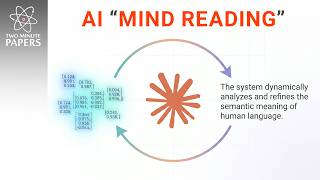
Claude AI Knows More Than It Tells You
[00:00] AI systems today are really powerful and [00:03] can do a lot. No question about that. [00:05] But, how do they really work? We have so [00:08] many questions. Do they think like [00:10] humans? How do they beat the best human [00:13] chess player? How

Claude Opus 4.8: Lying Machine No More
[00:00] Anthropics Claude Opus 4.8 is here. And [00:03] the system card describing its [00:05] capabilities is [00:07] 244 pages. Really excited for that. And [00:11] I went through it so you don't have to. [00:12] Why? Well, because otherwise we are [00:15] l

Here's a fun exercize for ChatGPT
[00:00] So one of my students, she had a problem [00:01] and she was asking um [00:03] and she asked good questions and rather [00:05] than give her the answer directly, I was [00:07] training her to ask better questions [00:09] because then she could sleuth a
Tragic mistake... Anthropic leaks Claude’s source code
[00:00] Yesterday, the most ironic thing ever [00:02] happened. Anthropic, a $380 billion [00:05] startup that built on the idea of safety [00:07] first, that advocates for closed-source [00:09] software for the supposed benefit of [00:11] humanity, a company

Cursor ditches VS Code, but not everyone is happy...
[00:00] It's 2 years ago, Cursor 1.0 was [00:02] released as a VS Code fork that helped [00:04] you auto complete your code with AI like [00:06] an airline co-pilot. Then, 6 months ago, [00:09] a Cursor 2.0 was released with an [00:11] upgraded chat view that

Claude Mythos is too dangerous for public consumption...
[00:00] Earlier this week, Dario and the [00:01] Anthropic team pulled the ultimate trust [00:04] me bro power move when they announced [00:05] Mythos, a model so powerful, so capable, [00:08] so veiny that they claim the fallout for [00:11] economies, public

Claude just got another superpower...
[00:00] In a shocking turn of events, that [00:01] absolutely nobody saw coming, except for [00:04] literally everyone, Anthropic just [00:05] dropped what might be their most [00:07] game-changing tool since Claude Code, [00:09] Claude Design, a new Opus 4.7
OpenAI's GPT 5.5 Instant: The Good, The Bad And The Insane
[00:00] Everyone is talking about Frontier chat [00:02] GPT models that do all the thinking and [00:05] the brilliant rocket science stuff. But, [00:08] the instant version. This is actually [00:11] what hundreds of millions of people [00:13] around the globe